Planning Poker: Guide + Free Template
An In-Depth Introduction to Planning Poker
Estimating or sizing up tasks in an agile environment is a task dreaded by many teams; ever varied in complexity, it often leaves room for heated discussions and disagreements. But what if there was a method to make estimation more enjoyable, collaborative, and, most importantly, accurate? That’s where Planning Poker comes into the limelight, providing a refreshing approach to estimation and enhancing team buy-in. This delightful method of estimation has proved, time and again, its worth in improving accuracy and fostering a participatory environment. But first, let’s get a handle on what Planning Poker is all about.
Understanding the Game: What is Planning Poker?
Planning Poker, often referred to as ‘Scrum Poker’, is a consensus-based, gamified technique for estimating the complexity and effort required for a project or a task in software development. The method was first proposed by James Grenning in 2002 and was later popularized by Mike Cohn in his book, ‘Agile Estimating and Planning’. What sets Planning Poker apart is its unique blend of collaboration, playfulness, and precision. It involves team participation, where each stakeholder can voice their opinions or concerns, resulting in better-informed decisions and overall team buy-in.
The Mechanics of Planning Poker
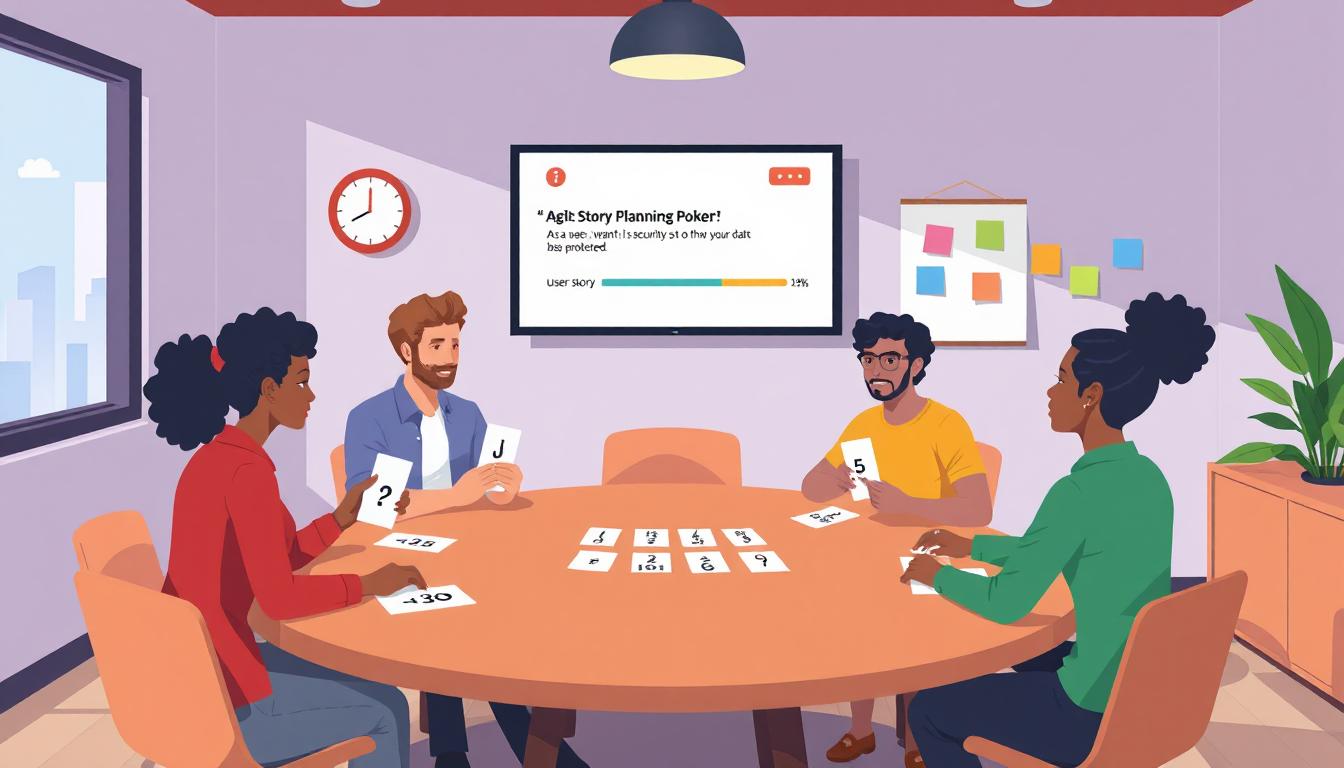
The game mechanics of Planning Poker are straightforward, encouraging full team engagement. To kick-start a session, the product owner, or the scrum master, presents a user story or a task to the team. The team then discusses the complexities and the associated work before individually estimating the task’s effort. They do this by using cards with values denoting effort or complexity, usually in a non-linear sequence like an adapted Fibonacci series (1, 2, 3, 5, 8, 13, …), which better reflects the uncertainty and complexity inherent in tasks. In a shell, the game unfolds in three steps – present, discuss, and estimate. Let’s delve into each phase.
Stages of the Game: Present, Discuss, and Estimate
The Presentation: An initial walk-through of the user story or task is facilitated by the product owner. He provides the team with needed context, outlines the desired outcome, and addresses any immediate questions or concerns.
Open Discussion: This stage is where the magic happens. All team members freely discuss their perspectives on the task’s scope and difficulty. This collaborative chat ensures that everyone brings their unique insights to the table, fostering a more comprehensive understanding of the task.
Estimation: Once the conversation plateaus, each team member privately selects a card representing their estimation of the task’s effort or complexity. When all cards are on the table, the discrepant estimations are discussed until a consensus is reached.
Why Does Planning Poker Work?
Planning Poker delivers impressive results, but why? The secret lies in its structure and methodology. The use of individual estimation protects against cognitive biases like anchoring, where the first number spoken out loud sets a precedent for the rest. Furthermore, it sidesteps the issue of conformity, encouraging every team member to estimate based on their understanding and not just tag along with the majority opinion. The open forums for discussion foster a conducive environment for addressing discrepancies and arriving at a consensus. This knowledge-sharing results in a more accurate estimate and a thorough understanding of the task at hand.
Free Template to Kick-start Your Planning Poker Games
To get the ball rolling on your Planning Poker sessions, we’ve put together a free template for your team. This template includes a deck of Planning Poker cards, a guide to conducting the sessions, and some practical tips and tricks to ensure your sessions go smoothly. It’s perfect for those looking to inject some fun and collaboration into their estimation process, and for the teams eager to improve their estimation accuracy. Remember, the goal of Planning Poker isn’t just about coming up with an estimate, it’s also about understanding the task fully and getting everyone on board, making your team more cohesive and engaged in the process.
In Conclusion
Planning Poker serves as a fantastic tool for boosted collaboration, enhanced understanding of tasks, and improved accuracy in estimations. Its simple yet powerful methodology encourages open discussions, critical thinking, and fosters team growth. Using our free template, you can start organizing effective Planning Poker sessions right away, reaping multiple benefits—accuracy, understanding, and, most importantly, team buy-in. So, are you ready to shuffle up and deal?