Agile in Manufacturing: Streamlining Production
“`html
Understanding Agile Beyond Software: The Manufacturing Revolution
When most people hear the term Agile, their minds zip straight to software development. Images of coders huddled around whiteboards, markers squeaking out diagrams and sprint boards, come to mind. However, the essence of Agile has gradually spilled over into diverse industries, with manufacturing being a notable and exciting beneficiary. Peeling back the layers, it’s easy to see why factories worldwide have started to rethink their approach using Agile methodologies to stay adaptive in ever-shifting markets.
In the world of car assembly, electronics, and consumer goods, production lines were for decades orchestrated through rigid schedules that could buckle under pressure from unexpected events—machine breakdowns, supply shortages, or sudden demand spikes. Now, manufacturers are leveraging Agile’s adaptable essence to keep their operations nimble, cut waste, nip bottlenecks in the bud, and roll out goods quicker than ever.
But how does Agile, with roots in software engineering, look in practice on the factory floor? What elements make it particularly impactful in streamlining production? Let’s journey through the transformation.
The Heart of the Matter: Core Agile Principles in Manufacturing
At its core, Agile thrives on flexibility, incremental progress, and feedback-driven improvement. While these ideas were tailored for the digital world, they’ve proven to be remarkably transferable to the physical realities of manufacturing processes. Let’s unpack how Agile reshapes traditional factory logic:
- Embracing Iteration and Feedback: Instead of producing vast quantities before assessing quality, Agile manufacturing focuses on continual feedback. Products evolve in small steps, allowing teams to detect issues or inefficiencies early.
- Testing Hypotheses Frequently: Agile encourages trying out small changes to machinery setup, workflow, or materials, observing the impact, and scaling up successes.
- Responding to Change Over Following a Plan: Consumer demand and supply chain realities can shift quickly. Agile principles urge manufacturers to adapt swiftly, rather than simply sticking to long-winded, inflexible plans.
- Collaboration and Empowered Teams: Production isn’t just a foreman barking orders. Cross-functional teams—from engineers to machinists—have more say in process improvements, troubleshooting, and decision-making.
Think about the iconic Toyota Production System; its methods predate the Agile Manifesto but embody many of the same principles—continuous improvement (kaizen), respect for employees, and commitment to quality.
Kanban on the Factory Floor: A Visual Symphony
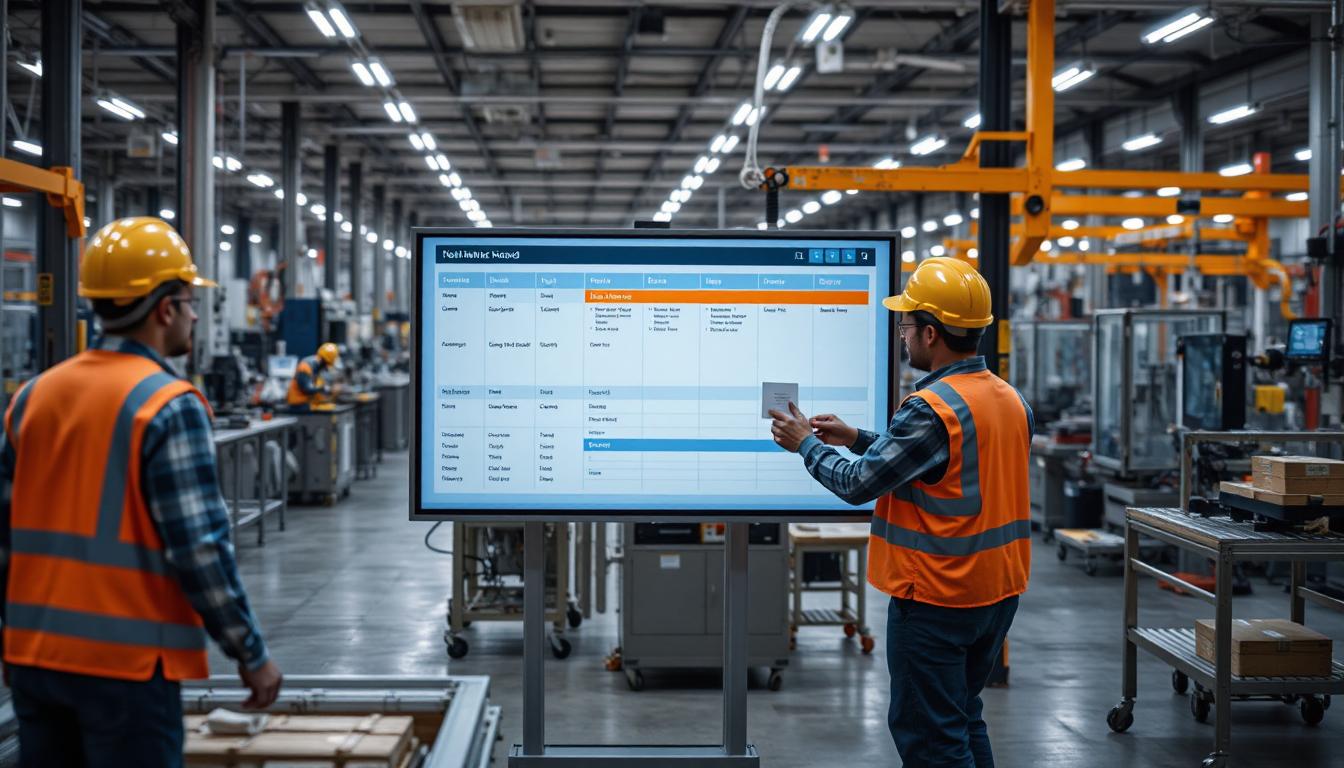
One of the signature Agile tools finding a happy home in manufacturing is Kanban. Originally a Japanese system for visualizing work, Kanban has become the lifeblood of numerous production floors. The system relies on visual cues—cards or digital dashboards—to track the flow of materials, parts, and assemblies.
Here’s how Kanban comes to life in a bustling plant:
- Visual Workflow Mapping: Each step of production is represented on a Kanban board. Cards, tags, or tokens (physical or digital) move from stage to stage, revealing bottlenecks instantly.
- Limiting Work in Progress (WIP): Only a set number of tasks or items can be ‘in progress’ at any stage, which prevents overloading equipment or operators and reveals any process blockages quickly.
- Pull, Not Push: Downstream teams ‘pull’ work when ready, rather than upstream processes dumping excess work on them, reducing excess inventory and storage costs.
- Adaptable Priorities: Daily or weekly, teams can re-prioritize the most urgent or value-adding tasks, ensuring production stays aligned with real-time demand and emerging issues.
For example, a mid-sized electronics manufacturer may once have produced batches based on quarterly forecasts. Now, using Kanban, assembly teams only build units as upstream requests arrive, holding fewer parts in limbo and halving lead times.
Iterative Planning: Smoothing and Shortening Production Cycles
Agile isn’t just about visualization—it’s about rhythm and iteration. In manufacturing, iterative planning swaps out annual “set it and forget it” schedules for shorter, tightly managed cycles often referred to as sprints in the Agile lexicon. While software sprints might last two weeks, production iterations are shaped by the unique tempo of the factory’s processes and customer orders.
The benefits of this approach ripple across operations:
- Minor Adjustments, Major Savings: Regular reviews help teams spot costly slowdowns or defects early, minimizing scrap and expensive rework down the line.
- Capacity Forecasting: By collecting data and feedback every cycle, planners can better align production levels to fluctuating demand, avoiding under- or over-production.
- Continuous Learning: Every iteration feeds data and lessons into the next—whether a tweak in robotic welding settings or a different assembly sequence proves superior.
- Faster Delivery: Products can reach customers in smaller, more frequent shipments instead of waiting for a giant production run to finish, boosting cash flow and customer satisfaction.
This feedback-driven, cyclical approach helps factories become learning organizations, continuously experimenting and optimizing, rather than rigidly following outdated playbooks.
Cutting Waste: The Lean-Agile Partnership
As anyone who’s spent time on a shop floor knows, waste is the silent killer of efficiency and profitability. It’s not just about piles of leftover metal or plastic—waste can mean over-production, unnecessary movement, excess inventory, or waiting time. Here’s where the synergy of Lean principles and Agile shines brightest.
Agile and Lean, while not identical, are philosophical cousins. Lean shines at excising waste, and Agile brings rapid adaptiveness and team empowerment. Merging these mindsets, manufacturing organizations have developed a toolkit to slash inefficiency while promoting innovation.
Here are some typical areas addressed:
- Value Stream Mapping: Teams map the end-to-end journey of a product to spotlight unnecessary steps or delays—then iterate and test changes to trim the fat.
- Kaizen Events: Short, focused improvement blitzes bring cross-functional teams together to problem-solve and rapidly implement enhancements.
- Cellular Manufacturing: Instead of herding parts all over a vast plant, workstations are grouped into “cells” where similar tasks are completed together, cutting transport time and confusion.
- Automated Feedback Loops: Machines are wired to provide performance data in real time, allowing teams to spot hiccups—like a jammed feeder or material shortfall—before small problems snowball.
Imagine a food packaging plant that previously binned hundreds of unsellable units each week due to minor labeling mistakes. Implementing Lean-Agile practices allowed the team to design a new feedback step, catching errors within minutes, and trimming weekly waste to almost zero.
Speeding Up Delivery Without Sacrificing Quality
Getting products to market faster is a constant drumbeat in manufacturing, but speeding up delivery without quality dropping off a cliff is no small feat. Agile practices, when thoughtfully applied, help manufacturers hit this sweet spot.
Some practical changes include:
- Shortening Setup Times: By breaking big, monolithic jobs into smaller chunks and continually optimizing changeover routines, production lines switch between product versions faster.
- Incremental Automation: Rather than massive, costly overhauls, Agile-minded manufacturers experiment with automating single steps, testing results, then scaling up what works.
- Cross-Training Teams: Employees learn multiple skills, so staffing gaps and workstation breakdowns no longer grind the line to a halt.
- Frequent Customer Demos: Manufacturers using Agile invite customers (internal or external) for regular review sessions, ensuring deliverables are on-target, reducing rejected shipments and redesign costs.
A telling anecdote: an auto parts supplier adopted a practice where every Friday, a “mini demo” is held for the logistics and sales team. They assess the latest batch, suggest tweaks, and adjust priorities for the coming week. What followed was a sharper alignment to market needs and a near-30% drop in late or defective deliveries.
Overcoming Hurdles: Challenges to Agile Adoption in Factories
Transitioning from traditional manufacturing paradigms to Agile can feel like steering a tanker in a hurry—momentum and ingrained habits are hard to shift. There are genuine challenges that must be reckoned with along the way:
- Culture Shock: Rank-and-file workers and managers often cling to the comfort of established processes, fearing that too much change might jeopardize consistency or job security.
- Training Needs: Agile isn’t plug-and-play; teams require tailored guidance on iterative planning, Kanban, and feedback loops, especially when most of their experience lies in traditional batch operations.
- Physical Constraints: Unlike software, where code can change at the speed of a keystroke, physical production lines may need significant retooling to enable flexibility. Machinery is less forgiving than digital platforms.
- Balancing Speed and Compliance: Highly regulated sectors (like aerospace or medical devices) must still adhere to safety and documentation standards, sometimes complicating fast-paced experimentation.
Yet, every revolution faces resistance before the benefits take root. By starting small—a pilot line here, a single product family there—many firms build up success stories that steadily win over skeptics.
Looking Forward: The Agile Factory of the Future
Agile methodologies aren’t just reshaping current manufacturing—they’re laying the tracks for the 21st-century factory. As smart machines, robotics, and the Industrial Internet of Things (IIoT) become more mainstream, factories will need to be more adaptive and forestall problems before they ripple downfield.
The factory of the future might look something like this:
- Self-organizing production teams overseeing clusters of robots, adjusting line priorities in real time as new orders or challenges arise.
- Machines feeding operational data to digital dashboards, giving instant feedback to human overseers who fine-tune processes without breaking a sweat.
- Production sprints aligned with digital twins—virtual models of entire factories—where tweaks are tested safely before hitting the real line.
- Digital Kanban boards stretching across global supply chains, keeping suppliers, warehouses, and production lines in transparent sync.
Ultimately, blending Agile practices with cutting-edge technology ensures that factories are not only lean and efficient but also poised to weather whatever the market throws their way.
Conclusion: Agile’s Real-World Payoff on the Production Line
To wrap it all up, Agile thinking isn’t just a fad imported from the software world—it’s a practical, powerful framework that helps manufacturers squeeze more value out of each nut, bolt, and labor hour. By fostering iterative improvement, data-driven planning, and team empowerment, production lines become more resilient, adaptable, and responsive.
In a nutshell, Agile in manufacturing offers more than just faster delivery and fewer defects; it cultivates a workplace where teams collectively strive for better ways of working, learning from setbacks, and celebrating wins—big and small. As the pace of change picks up and market demands shift, those bold enough to weave Agile into their operations will be the ones setting the agenda, rather than playing catch-up.
So, whether you’re overseeing a high-tech electronics plant or a decades-old family workshop, embracing Agile principles might just be the compass you need to navigate the complexity and opportunity of modern manufacturing.
“`