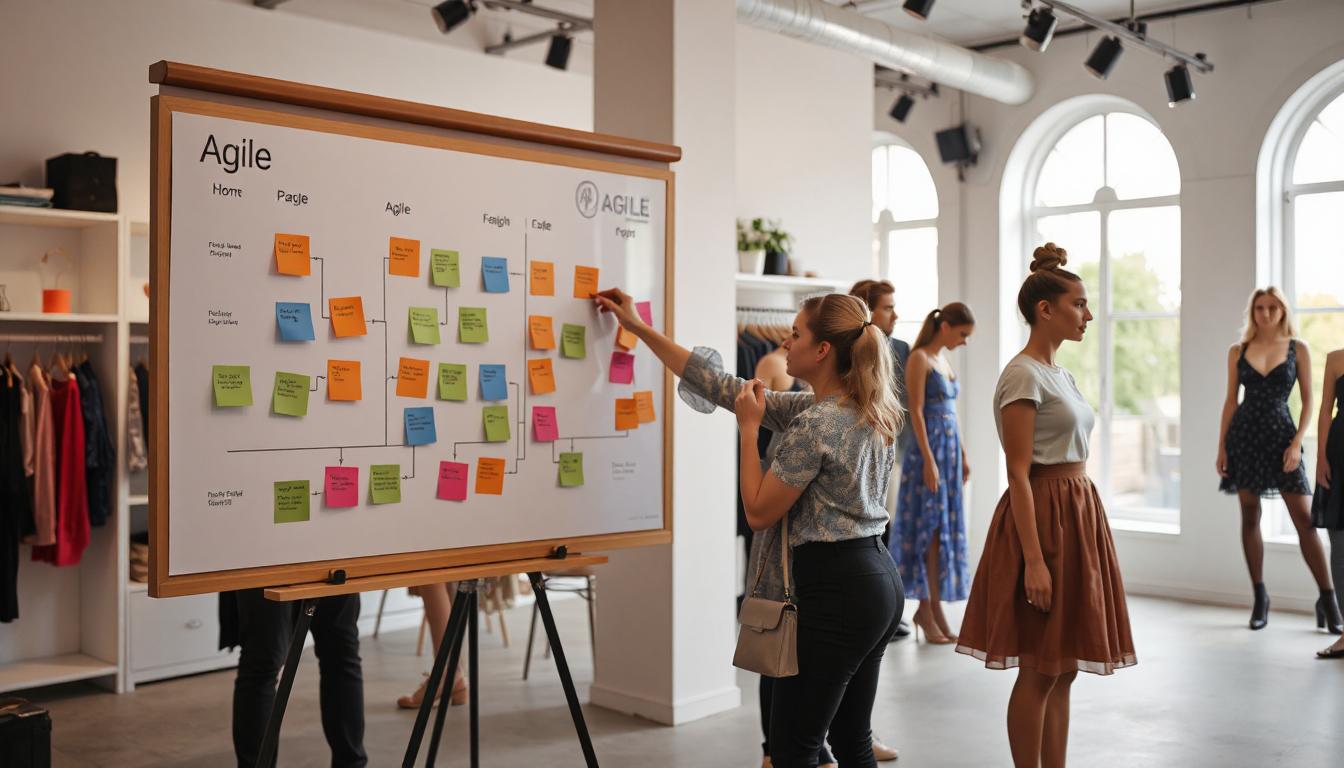
Agile in Fashion: Designing Collections Iteratively
The Intersection of Fashion and Agile: Rethinking How Collections Come to Life
At first glance, the world of haute couture and the iterative methodologies of tech startups may seem planets apart. Yet, beneath the seams and server racks, lies a shared pursuit: pushing the envelope while responding to real-world feedback at lightning speed. Fashion is notorious for its pace think fleeting trends, ever-changing consumer moods, and cutthroat competition. Meanwhile, Agile methodology, once the darling of software development, excels at managing rapid change and uncertainty. But what happens when you blend the structure of Agile with the artistry of fashion design? A revolution in creative workflows emerges, transforming how collections are conceived, refined, and delivered.
This approach is not just for headline-grabbing brands or Silicon Valley’s sneaker-wearing moguls. Even established fashion houses and independent designers are borrowing principles from Agile like sprints, standups, and rapid prototyping to shake up the old rules and meet shifting market demands. Here, we’ll dig deep into how iterative processes are rewriting the playbook for fashion creators and why this new mindset is making waves across runways and retailers alike.
Agile Fundamentals: Translating Tech Jargon into Fashion Practices
Before diving into its applications, let’s demystify Agile for the fashion set. Originally born from frustrations with rigid, waterfall-style project management in software, the Agile approach thrives on teamwork, flexibility, and close communication. In software, it’s about quick releases, user feedback, and constant revisions.
Translated to fashion, Agile becomes a toolkit for creative teams hungry for speed, adaptability, and continuous improvement. Here’s how some core Agile practices materialize on the studio floor:
- Sprints: Instead of dragging out the design phase for months, work gets broken down into short, focused bursts (think two to four weeks). Each sprint targets a specific goal say, prototyping new denim silhouettes or refining color palettes for the upcoming season.
- Feedback Loops: Designs aren’t kept secret until the grand reveal. Teams present their work to internal reviewers, customers, or even social media audiences to gather early input, tweaking pieces before production scales.
- Cross-functional Teams: Pattern makers, fabric experts, digital marketers, and merchandisers collaborate closely, sharing insights and solving problems on the fly instead of handing off tasks down a linear chain.
- Standup Meetings: Brief daily check-ins help teams sync up, flag roadblocks, and recalibrate priorities as needed.
- Retrospectives: At the end of each sprint, the team pauses to reflect what worked, what fell flat, and how they can improve next time.
The result? Fashion studios that can ditch the “one-shot” seasonal calendar, instead unveiling pieces that are responsive, fine-tuned, and more attuned to their wearers’ desires.
From Sketch to Sample: How Iterative Design Fuels Creative Excellence
Picture a traditional fashion cycle: lengthy brainstorming, isolated sketching, and one or two nerve-wracking rounds of samples before committing to production. Now, layer in Agile’s iterative rhythms. Suddenly, the collection’s evolution is more like sculpting from clay shaping, assessing, and reshaping in rapid succession until the vision feels just right.
Consider a team rolling out a capsule collection inspired by streetwear culture. Rather than laboring over a dozen pieces at once, they zero in on a few hero styles say, a statement jacket and a bold graphic tee. Over a two-week sprint, digital mockups are created, fabric swatches tested, and 3D prototypes reviewed by everyone from pattern cutters to marketing leads. Early prototypes, whether physical or digital, get critiqued not just for aesthetics, but also for wearability and production feasibility.
This bite-sized, feedback-driven workflow makes it possible to:
- Spot and fix flaws instantly – Maybe the pocket placement is awkward, or a trending color reads differently under studio lights. Corrections happen now, not three months down the line.
- Experiment fearlessly – By knowing that not every idea has to be perfect on the first go, designers feel more comfortable pushing boundaries, often landing on surprising, innovative details.
- Meld creative and commercial goals – Merchandisers can weigh in early about pricing, target audience fit, or potential supply issues, ensuring the end product hits the sweet spot between runaway creativity and real-world sell-through.
In effect, every stage of collection-building becomes a chance to reevaluate and realign with both creative vision and market potential. It’s a living, breathing process, not a fixed path from A to Z.
Real-Time Trend Testing: Letting the Market Shape the Runway
One of the riskiest games in fashion is betting on trends. A lightning-in-a-bottle look might fizzle before it hits the shelves, or a sleeper trend could explode overnight. Traditional studios often gamble months in advance, with market feedback arriving too late to adapt. Agile-powered designers flip this script: they test the waters early and often.
Social media has become a live laboratory for these experiments. Brands might launch limited drops of unfinished ideas exclusive colorways, customizable patches, or work-in-progress accessories to gauge audience reactions. Micro-influencers and loyal customers become co-creators, voting, commenting, and sharing.
For example, a designer explores the “y2k revival” energy by releasing a handful of retro-inspired bucket hats. Engagement metrics and feedback inform which styles or fabrics to scale up, which to toss, and which to tweak. Instead of second-guessing, teams have data (and buzz) driving their next decisions.
- Risk is spread, not concentrated: Rather than banking an entire season on a single untested idea, teams roll out iterative mini-launches, hedging against flop risk.
- Collections become crowd-tuned: Designers marry their creative instincts with statistical evidence, learning which cuts, colors, or fabrics consumers crave.
- Production is leaner and faster: Fast-moving, data-backed sprints allow on-demand manufacturing, reducing both overstock and missed opportunities.
By turning market feedback into a live ingredient, fashion studios generate collections that not only tap into current tastes but can pivot as trends evolve.
Collaboration Over Handoffs: Building Teams that Blend Skills and Perspectives
In traditional fashion houses, the workflow often feels compartmentalized designers sketch, pattern makers cut, product developers problem-solve, and merchandisers plan how things hit the shelves. Feedback may trickle back once or twice, but often too late for meaningful change.
Agile disrupts these silos, championing multi-disciplinary teams who work in tandem from ideation to final fitting. Imagine a core group where a textile researcher, a marketing strategist, and a digital illustrator huddle around a shared table (or Zoom window), chipping in from day one. This proximity fosters:
- Faster problem identification: A fabric’s cost or supply risk can be flagged before it derails a design months later.
- Hands-on learning: Those who spend time in the factory or interact with buyers can inject real-world insights during the development process, not as an afterthought.
- Ownership and accountability: When everyone sees the whole process and owns the outcome, motivation and mutual respect flourishes.
Collaboration replaces hierarchy, and creative tension becomes productive fuel rather than a recipe for conflict. If there’s one “secret sauce” in Agile fashion, this open, co-creative environment just might be it.
Adapting Under Pressure: Case Studies of Agile Success in Fashion
Real-world examples bring Agile in fashion from concept to catwalk. During the COVID-19 pandemic, for instance, supply chains shifted overnight, and consumer behaviors morphed in lockstep. Brands practicing Agile had the muscle to pivot quickly. One European streetwear label, facing a materials shortage, reallocated team resources and rapidly sourced alternative fabrics, adjusting silhouettes in real time through digital sprints. They debuted a new collection online within weeks while competitors watched production stall.
Meanwhile, a California-based direct-to-consumer brand began hosting weekly Instagram polls. Followers chose among sketches, colors, and even fabric options. Each two-week sprint produced limited-run drops, many of which sold out instantly, demonstrating how iterative engagement drives both immediacy and intimacy between brand and buyer.
Jaunt NYC’s design studio adopted Agile not only to shorten its cycle times but also to foster a more resilient, mentally healthy work environment. Frequent retrospectives allowed the team to share candid feedback, surface burnout triggers, and distribute workloads more sustainably leading to lower turnover and sharper creative output.
What unites these cases is not any single technology or management tool, but an obsession with responsiveness, transparency, and collective progress. Agile, when well-executed, becomes less about rituals and more about mindset a shared belief in learning, adapting, and growing, together.
Obstacles and Solutions: Navigating Challenges in Agile Fashion
While Agile offers a thrilling ride, the road isn’t bump-free. For longstanding fashion houses with deep hierarchies and rigid calendars, breaking old habits can resemble moving mountains. Resistance often comes from fear of losing control, undermining creative authority, or risking workflow chaos.
- Cultural inertia: Transitioning to Agile requires changing the way teams think about deadlines, roles, and “perfection.” It takes buy-in from leadership and champions within the ranks to model new behaviors.
- Overlap and confusion: With more voices and stakeholders mixing in, teams can hit decision gridlock. Clear roles, well-timed check-ins, and decisiveness in retrospectives help keep progress steady.
- Learning curve: Even the language of Agile scrums, sprints, kanban can be daunting at the start. Investing in education, from outside coaches or internal workshops, smooths the transition.
Solutions rarely involve ripping up the rulebook. Instead, successful teams blend legacy practices that still add value (like seasonal storytelling or signature fits) with Agile’s iterative bite-sized cycles. It’s about layering flexibility atop tradition, not erasing institutional wisdom.
Consider incremental shifts: piloting Agile on one capsule collection, running bi-weekly standups instead of daily, or co-creating with a trusted set of partners first. These bridge steps let teams experiment, iterate, and ultimately adopt what fits their unique culture and needs Agile isn’t one-size-fits-all, and shouldn’t be.
Agile’s Future on the Runway: Beyond Trends, Into Lasting Transformation
As fashion’s landscape continues to evolve, Agile promises more than just speed it offers resilience and relevance. The ability to sense and respond, to tune in to both customers and collaborators, helps brands thrive in uncertainty. Just as streetstyle and broadcasted runway shows have democratized inspiration, Agile is democratizing creative iteration and feedback.
Moreover, technology will only amplify these possibilities. Think of AI-driven mood boards, VR-enabled sample rooms, or instant consumer polls, all feeding real-time, actionable insights into the heart of the design process. Yet, the true power of Agile lies less in the bells and whistles than in human habits: openness, curiosity, and a shared hunger to get better, continuously.
Imagine a future where collections unfold as living stories shaped by real-world events, subcultures, and spontaneous bursts of inspiration. Creative teams might operate more like indie music collectives than top-down corporations nimble, responsive, and plugged into the pulse of their audiences. For up-and-coming designers and juggernaut brands alike, Agile offers not just a method but a movement a smarter, swifter, and more soulful way to make fashion that matters.
In the final reckoning, as cycles accelerate and attention spans wane, those who embrace Agile will likely lead the pack not just for cutting-edge style, but for deeper connection and lasting impact. The future of fashion is in motion, and with Agile, every step is a chance to adapt, improve, and dazzle anew.


