Agile in Film Production: From Script to Screen
The Intersection of Agile Thinking and Filmmaking
Film production may outwardly seem a world apart from the software startups that birthed Agile methodologies, but at heart, both realms boil down to teams navigating uncertainty, shifting requirements, and relentless time pressures. If you’ve ever been on a film set corralling actors, wrangling gear, chasing daylight as the script pages keep changing you know creative chaos is the norm. Traditionally, film projects have relied on rigid schedules, linear processes, and the infamous “fix it in post” mentality. However, the tides are shifting. More directors, producers, and crews are borrowing from Agile’s playbook, finding in its iterative rhythms and transparency the perfect antidote to filmmaking unpredictability.
This article traces how Agile principles originally designed for code but shockingly effective on set are redefining the path from script to screen. We’ll unpack practical tools like sprints and Kanban boards, see how feedback loops are transforming edits, and discover why studios using Agile not only move faster, but make stories audiences truly care about.
Understanding Agile: Not Just for Coders Anymore
First, let’s demystify what we mean by “Agile.” Born in the fast-paced world of software development, Agile is less a rigid script and more a mindset. It’s about breaking massive, daunting projects into manageable chunks, working collaboratively in short cycles (called iterations or sprints), and constantly adjusting based on feedback. Teams keep communication open, priorities visible, and egos in check so the best ideas win, even if they emerge late in the game.
Key pillars of Agile include:
- Iterative Development: Work is divided into repeated cycles, producing small batches of output that improve over time with feedback.
- Collaboration: Everyone from directors to camera operators shares responsibility for quality, suggesting improvements as they go.
- Transparency: Tools like Kanban boards and daily stand-ups ensure everyone can see what’s happening and what’s changing.
- Adaptability: Instead of plodding through a rigid schedule, Agile teams pivot gracefully when scripts evolve or reality intervenes (as it always does in filmmaking).
Unlike traditional approaches where you might labor for months before screening a rough cut, Agile emphasizes earlier and frequent review, reducing surprises and last-minute crises. For film crews used to all-nighters and “fix it in post,” Agile offers sanity without stifling creativity.
Scripting an Agile Production: Planning in Short, Sharp Sprints
So, how do you bring iterative strategies to the development of a film? Let’s start with the earliest phase: the script. Rather than locking every line before a single slate is clapped, Agile-inspired teams draft, test, and revise in focused bursts.
- Sprinting the Script: Instead of drafting the entire screenplay in isolation, writers work in short, timed cycles. Each week, a set number of pages is delivered for the team to review allowing for pivots if characters, tone, or pacing miss the mark.
- Building “User Stories”: Agile teams in tech often use “user stories” to clarify what the customer ahem, audience wants to experience. In film, this translates to capturing the essential beats and emotions the viewer should feel during key scenes, then crafting scripts to bring those moments to life.
- Real-time Feedback: Early table reads and informal “audience proxies” provide feedback before the entire script is finalized, reorienting the creative direction without a massive rewrite down the line.
The result? Collaborative rewrites and course corrections happen when they’re easy, not under the pressure-cooker of a locked shooting schedule.
Kanban on Set: Visualizing Progress and Removing Obstacles
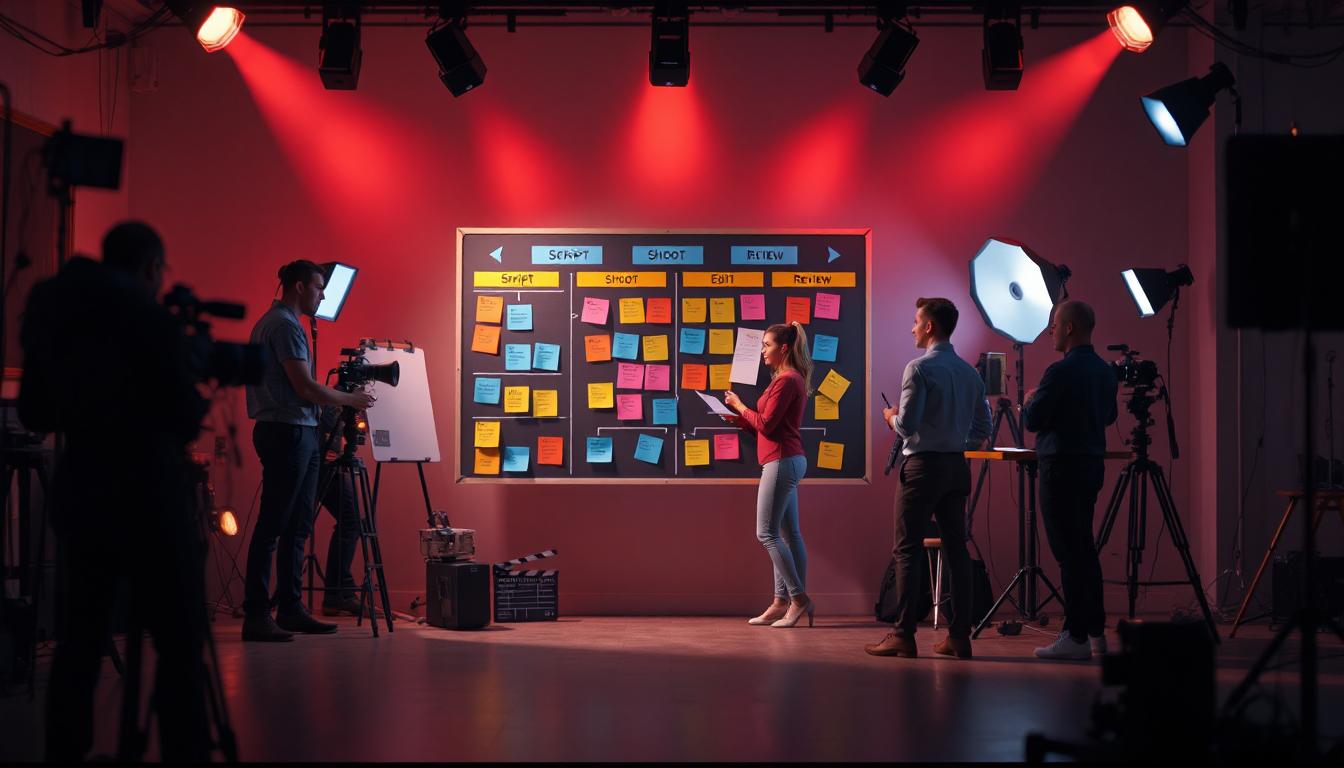
As a shoot actually gets underway, chaos is king: locations shift, weather meddles, equipment fails, and somehow, everyone is always looking for coffee. Enter the Kanban board, a simple yet shockingly effective Agile tool that brings visual order to the madness.
Here’s how Kanban transforms film production management:
- Every Task in View: With scenes, props, costumes, or special effects broken into individual “cards,” the whole crew can instantly see which steps are being planned, which are in progress, and which are done. This eliminates the panic of lost to-do lists or ambiguous status reports.
- Unblocking the Flow: When a card gets “stuck” say, a location can’t be secured, or a costume isn’t ready the problem is visible to all. The team quickly rallies around the bottleneck, finding workarounds before the delay snowballs.
- Reported Progress: Unlike long weekly meetings, quick Kanban stand-ups require only a few minutes for each department to update their status and flag surprises. No more wandering aimlessly or double-booking resources.
Many modern productions use physical whiteboards filled with color-coded sticky notes, while others rely on digital tools like Trello or Monday.com, which are accessible from mobile phones between takes. It may seem simple, but seeing every task in a single glance helps everyone stay aligned, motivated, and prepared for surprises (or miracles).
Shooting in Iterations: Short Cycles for Flexibility
Forget the traditional “shoot schedule” designed to optimize every hour on paper but rarely surviving contact with reality. Agile productions break the work into bite-size “iterations” or mini-sprints, typically a few days or a week long. Each sprint has clear goals maybe filming all shots for a particular set, character, or narrative beat.
- Focus and Adaptation: Shooting just a segment at a time enables the team to incorporate feedback, try multiple takes, and adjust for unexpected challenges. If a key location suddenly becomes unavailable, you keep momentum by pivoting to another sprint’s target without derailing the whole schedule.
- Continuous Improvement: After each sprint, the cast and crew gather to review footage and reflect on what went well, what needs adjustment, and how to streamline for the next round. This feedback loop is the secret sauce keeping morale high and creative energy flowing.
- Decentralized Decision-Making: Empowering departments to solve most problems locally (rather than bottlenecking through a single producer or director) frees up creative bandwidth and surfaces solutions from unexpected places. After all, you never know if your best idea will come from the lighting grip or the catering crew.
The final product isn’t a single, massive leap of faith; it evolves organically, steered by daily discoveries and real-world constraints.
Post-Production Unleashed: Feedback, Fast Loops, and Iterative Editing
In traditional filmmaking, post-production is often a lonely, protracted process months of solitary editing, scattered review screenings, and, sometimes, a mad rush to patch problems revealed too late. Agile in post changes all that. Editors, sound designers, visual effects artists, and even composers collaborate in overlapping cycles, building up the finished film layer by layer.
- Rough Cuts Early and Often: Editors share rough sequences before the film is complete, allowing directors and test audiences to give focused, actionable notes. Rather than waiting until the end, issues are caught when they’re still manageable.
- Parallel Processes: Sound mixing and visual effects don’t have to wait until picture lock. Agile workflows allow multiple post-production teams to iterate simultaneously, reducing overall project duration.
- Audience Feedback Loops: Hosting “sneak peeks” or limited test screenings, filmmakers gather real audience reactions early, adapting storylines, pacing, or even entire scenes for better emotional impact. Instead of a “big reveal” at a film festival, the story is tuned for its intended audience from the start.
In sum, post-production moves away from isolated artistry and toward collaborative, responsive craftsmanship.
Agile in the Wild: Real-World Case Studies
You don’t need to look far for real examples of Agile’s transformative effects on filmmaking. Both blockbuster studios and indie upstarts have borrowed Agile elements, yielding faster turnarounds and more resilient teams.
- Pixar’s Braintrust Model: Although not branded explicitly as “Agile,” Pixar’s system of regular creative “dailies” and iterative feedback from a small group of trusted colleagues mirrors Agile’s core values: humility, openness, and relentless improvement.
- Guerilla Indie Films: Micro-budget productions often operate with skeleton crews, limited resources, and no margin for error. Agile has helped many such teams survive by embracing “just enough planning,” moving quickly from concept to screen, and using lightweight digital tools to coordinate on the fly.
- Studio Blockbusters: Even big-budget franchises have begun using Kanban boards for VFX shots, organizing production sprints, and breaking the post-production process into parallel streams, dramatically reducing delays between edit and release.
The pattern is consistent: productions that iterate, adapt, and keep team communication transparent outperform those stuck in top-down, inflexible hierarchies.
Challenges and Lessons From the Trenches
Of course, no methodology is a panacea especially for something as wild and creative as film. Some crews find Agile tools initially “foreign,” worried they’ll disrupt artistic spontaneity or create bureaucracy. Agile only thrives with buy-in from both the creative and technical sides; directors have to embrace input from crew, and seasoned grips must be willing to rethink old routines.
Shifting mindsets in film can involve:
- Letting Go of Perfectionism: The first draft, first take, or first cut is rarely the best. Agile is about progress over perfection a challenge for deeply invested creatives.
- Balancing Structure with Freedom: Too much process can stifle experimentation; too little and chaos reigns. Striking the right balance is an ongoing negotiation.
- Risk of Scope Creep: Constantly shifting priorities can expand the project’s scope if not carefully managed. Clear goals and frequent check-ins help keep ambitions in check.
- Onboarding the Team: Not everyone is familiar with Agile jargon. Training and clear communication matter more than flashy tools or boards.
The most successful Agile film productions adapt not just the tools but the spirit of ongoing learning, vulnerability, and team-oriented problem-solving.
Conclusion: Why Agile is Here to Stay in Film
While every film is different and every director or crew brings their own flavor the surge in Agile practices is more than a passing trend. The demands of modern audiences, the rise of streaming, and the crunch of shrinking budgets mean production schedules have never been tighter or more uncertain. In this environment, the ability to pivot, listen, and respond quickly isn’t a bonus; it’s the only way to thrive.
By bringing Agile’s iterative sprints, visible workflows, and rapid feedback loops onto the soundstage and into the edit suite, film productions of every size are delivering higher quality films, faster. If you’re in the industry and still doing things “the old way,” it might be time to steal a page from the Agile playbook. After all, the show must go on and these days, it goes on smarter and faster when Agile is calling the shots.