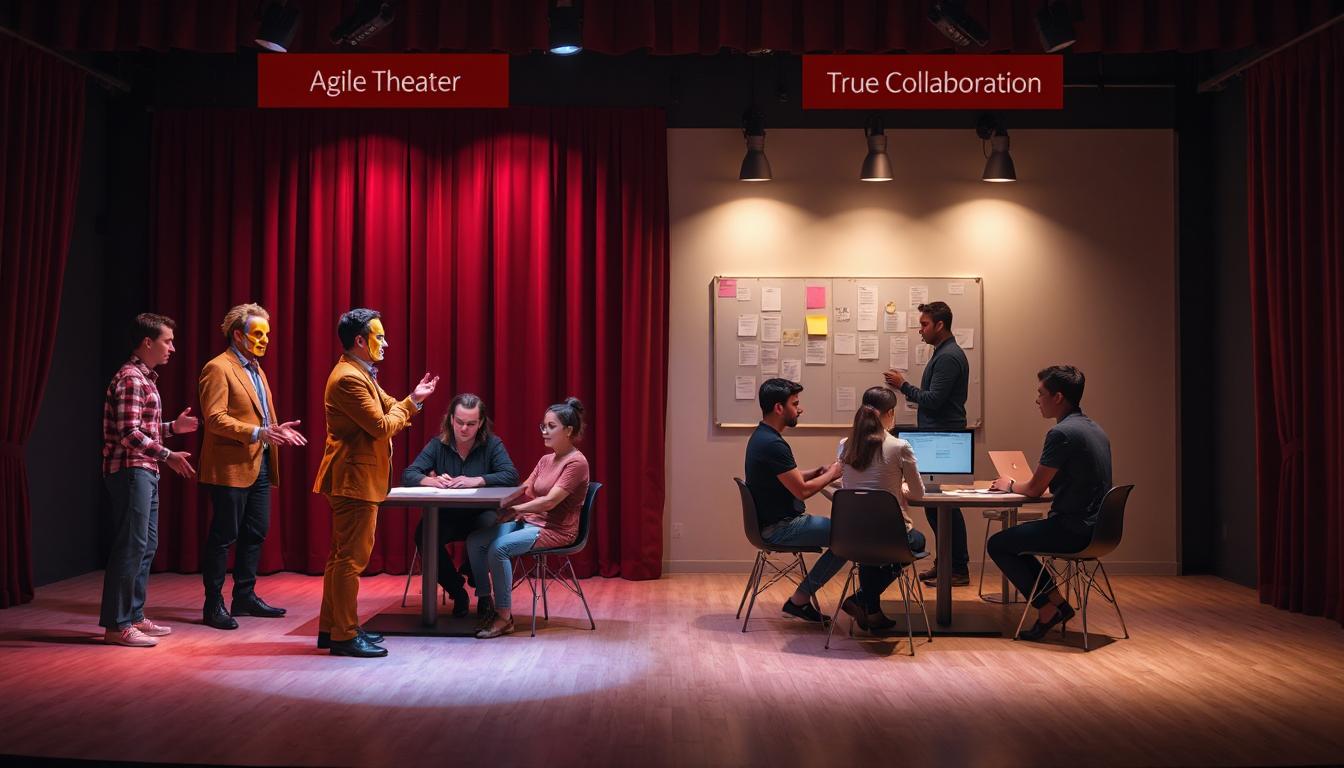
True Agile vs Agile Theater: Signs to Watch
A Brief Introduction to Agile
Agile, a term that has gained considerable traction in the world of software development, represents more than just a mere methodology; it is a way of thinking, a philosophy that encourages flexibility, responsiveness, and embracing change. Properly implemented, Agile delivers immense value, allowing teams to adapt swiftly to evolving customer needs and market trends. However, its growing popularity has also led to the rise of what’s frequently referred to as “Agile Theater,” a surface-level adaptation of this approach that generally falls short of real agility.
Understanding Agile Theater
Coined for instances where organizations claim to practice Agile methodologies but lack the in-depth understanding or commitment needed, Agile Theater manifests as a pretense of agility without the elusive substance. These organizations implement Agile-related terms, ceremonies, and artifacts, often without grasping the underlying principles or why these elements are indeed crucial. They carefully follow Agile routines, yet miss the bigger picture—improving customer experience, fostering innovation, and driving continuous improvement.
Red Flags Indicating Agile Theater
When trying to discern between True Agile and Agile Theater, there are several telltale signs that the latter is at play. These signs demand attention as they usually indicate a workflow that isn’t truly agile and a team failing to reap the significant benefits that Agile can provide.
- Rigid Processes: Agile encourages fluidity and change adaptability. If a process seems rigid or resistant to adjustment, it’s possibly Agile Theater. Real Agility allows adaptability in response to team feedback and changing project requirements.
- Lack of Feedback: One of Agile’s cornerstones is continuous feedback and improvement. If there’s a void of regular feedback and reflection, it signals Agile Theater.
- Overemphasis on Tools: While tools can facilitate Agile practices, they shouldn’t dominate the workflow. Agile is more about mindset and interactions, and an overemphasis on tools suggests a superficial understanding.
- Excessive Documentation: The Agile Manifesto values working software over excessive documentation. If comprehensive documents overshadow actual work, it’s likely not True Agile.
- No Failing Allowed: In Agile, teams should feel safe to fail and learn from mistakes. If failure isn’t tolerated, the environment probably mirrors Agile Theater, not True Agile.
Moving from Agile Theater to True Agile
The journey from Agile Theater to True Agile requires deep-rooted organizational changes, new perspectives, and an unwavering commitment to Agile principles. Here are a few steps to navigate this transformational journey.
- Deep Understanding of Agile: Start with ample learning and training on Agile and its principles. It’s crucial to understand that Agile is a mindset, not merely a process or set of tools.
- Work Towards Collaborative Teams: Foster an environment where teams actively collaborate and give/receive frequent feedback. Recognize that team dynamics are essential to Agile’s successful implementation.
- Focus on Customer Value: Adopt customer-centric practices. Prioritize tasks that add value to the customer and spur innovation.
- Embrace Change: Ingrain a culture that accepts, adapt to, and capitalize on change. Recognize that change isn’t adverse, but a driver of growth and innovation.
- Learn from Failure: Encourage a fearless attitude that doesn’t penalize failure, but sees it as a stepping stone for improvement.
Conclusion
While recognizing the signs of Agile Theater is a crucial first step, it is equally important to foster a culture of True Agile. Agility is not merely adopting a new process—it’s embracing a mindset of continuous learning, adaptation, and delivering the highest value in all circumstances. The sooner organizations recognize and resolve Agile Theater, the sooner they will yield the exceptional benefits of True Agile.